
The development of South Kirkby and Moorthorpe spans from prehistoric settlement and Roman rural occupation through medieval manorial governance to the peaks of the industrial revolution and beyond. The earliest recorded evidence of human habitation in South Kirkby and Moorthorpe is what at times was colloquially known as ‘Saxon camp’ (hence Saxon Mount nearby), but more accurately being known as South Kirkby camp, an archaeological site protected under the Ancient Monuments and Archaeological Areas Act 1979, by Historic England.
A 1997 geophysical survey and analysis, published by the West Yorkshire Joint Services, confirmed that South Kirkby camp is a roughly oval earthwork defined by an earthen bank and ditch complete with what is almost certainly a small Iron Age enclosure. This earthwork features an internal bank spanning approximately ten metres wide and one metre high, paired with an external ditch between seven and ten metres wide, which indicates a prehistoric enclosed settlement rather than Saxon military encampment.
Following the Iron Age, subsequent archaeological interventions have confirmed that the area around the camp was utilised during the Roman occupation of Britain, with a series of known Roman archaeological sites in this part of South Kirkby. Extensive survey work, documented across the West Yorkshire Sites and Monuments Record, has identified scatters of Romano British pottery, complex field systems and banjo enclosures, and coin finds in the surrounding agricultural landscape. These finds indicate that while South Kirkby was not the site of a major Roman settlement it formed part of a managed, productive Roman landscape.
Place names in the area also contribute to the story. Linguistic and toponymic evidence highlights subsequent Anglo Saxon and Viking settlement shaped the local geography before the arrival of the Normans. The place name Kirkby derives from the Old Norse kirkju, meaning church, and býr, meaning village or settlement, which proves that Scandinavian settlers identified a prominent pre-existing Anglo Saxon Christian community in the area. Moorthorpe likely commbines the Old English mōr, meaning moorland, with the Old Norse þorp, signifying an outlying, dependent farmstead or minor settlement.
One of the key routes through South Kirkby, Stockingate, likely merges the Middle English stocking, which refers to a cleared area of tree stumps, with the Scandinavian gata, meaning a road or street. Another example, Langthwaite, stems from the Old Norse langr, meaning long, and þveit, meaning a meadow or woodland clearing, which shows that settlers undertook the systematic clearing of local forests for early agricultural fields.
The formal lordship of the manor of South Kirkby began in the late Anglo Saxon era. Prior to the Norman Conquest of 1066, the lands were held as an independent estate by two Anglo Saxon noblemen, Sveinn and Arnketill. Following the conquest, William the Conqueror seized the town and granted the wider honour to the Norman magnate Ilbert de Lacy, who oversaw the territory during the compilation of the Domesday Book, of 1086.
In the Domesday survey, South Kirkby was recorded as Cherchebi, and it was within the Strafforth wapentake, along with the small farmstead of Thorpe (Moorthorpe). Notably it was recorded that there was a church and a priest. Ilbert de Lacy managed these vast holdings from his administrative centre at Pontefract Castle, a territory that came to be known across medieval records as the Honour of Pontefract.
Control of the manor later fragmented into various mesne lordships, monastical holdings, and gentry domains. During the high medieval period, significant grants were made to Nostell Priory, which held the rectory and significant farming rights until the dissolution of the monasteries, under Henry VIII, at which point the manor, town, and local tithes were purchased by Richard Pymond, a merchant of Wakefield.
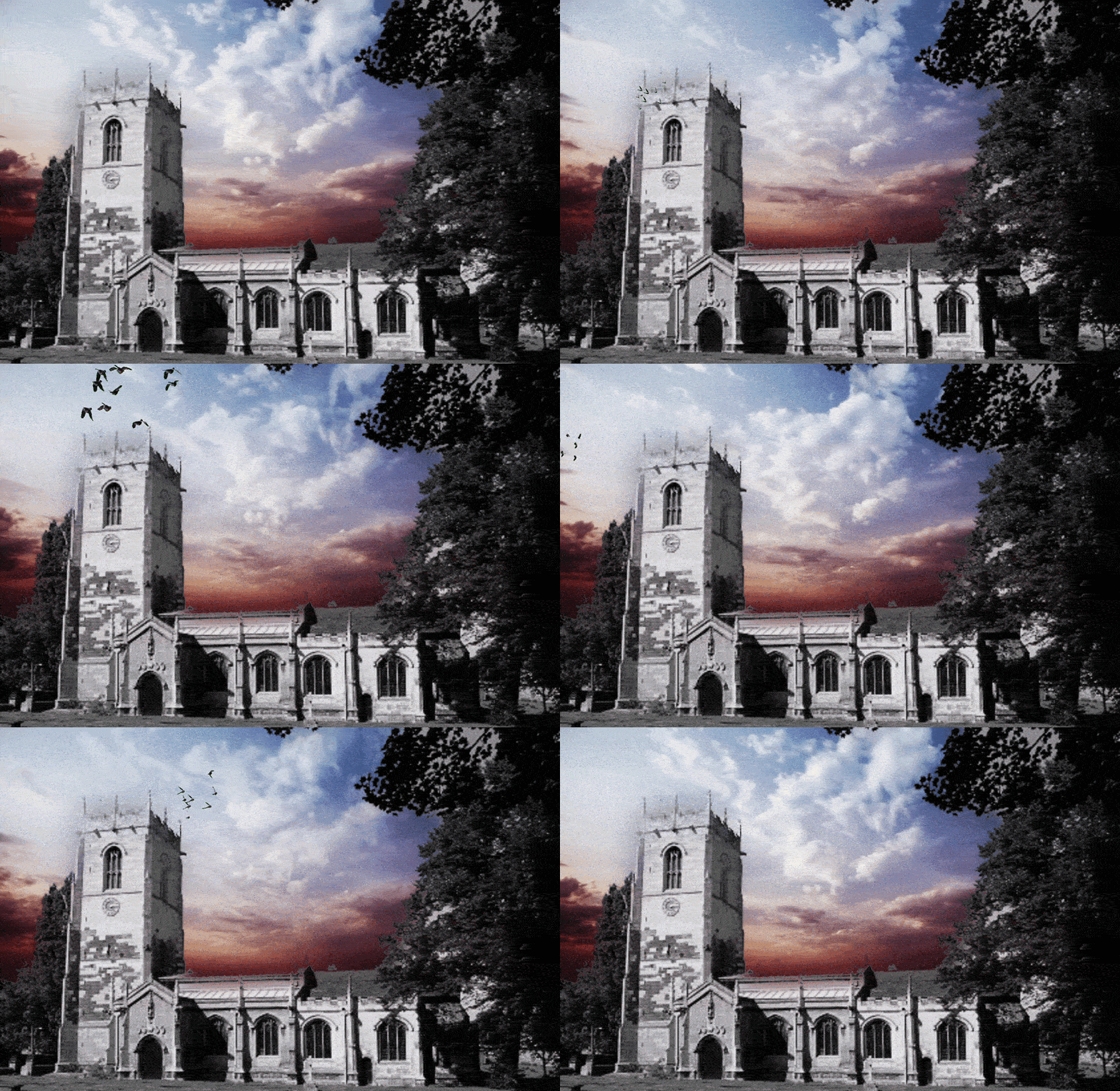
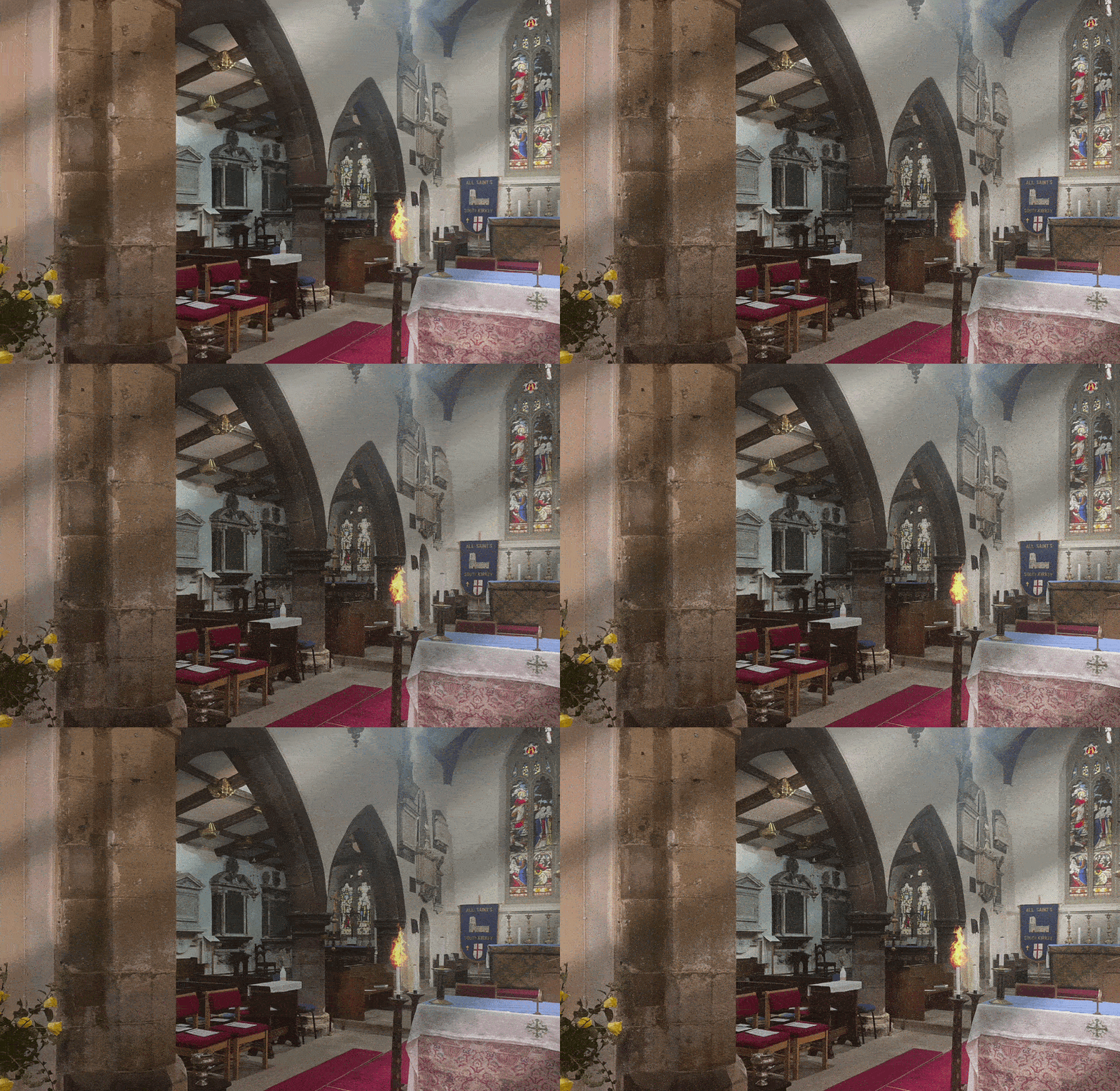
The church at the centre of this manor was the now Grade I listed church of All Saints. Built of dressed magnesian limestone the building retains known Anglo Saxon foundations and interior wall fabric, though its visible exterior features, dominant west tower, and chancel chapels reflect a comprehensive Perpendicular Gothic remodelling, completed around 1470.
Across the broader, ancient ecclesiastical parish of South Kirkby important land and buildings belonged to the Wentworth family of North Elmsall Hall, who were highly influential historical figures and who served as patrons and benefactors of All Saints Church. Generation after generation of the Wentworth family financed structural enhancements to the church fabric, and their enduring patronage is recorded in the numerous stone monuments, crypts, and memorial markers belonging to the Wentworth family that are preserved inside the church to this day, as well as the eroding crests above the main porch.
By the seventeenth century the principal local domestic seat of the local gentry became established at Hague Hall, a prominent country house situated on Water Lane. Originally built in the early seventeenth century, the hall served as the ancestral home of the Allott family. The village also retained an ancient tithe barn, historically located close to All Saints and the associated rectory farm house, which served as a crucial stage for military friction during the English Civil War. Sadly these are all lost.
Local seventeenth century military accounts, including entries in the 1645 diaries of royalist soldier Nathan Drake, during the first siege of Pontefract, document the volatile movement of troops through the Osgoldcross wapentake. By 1647 Oliver Cromwell’s Parliamentarian troops had systematically seized the tactical avenues surrounding Pontefract Castle and made use of the tithe barn in South Kirkby to billet their forces.
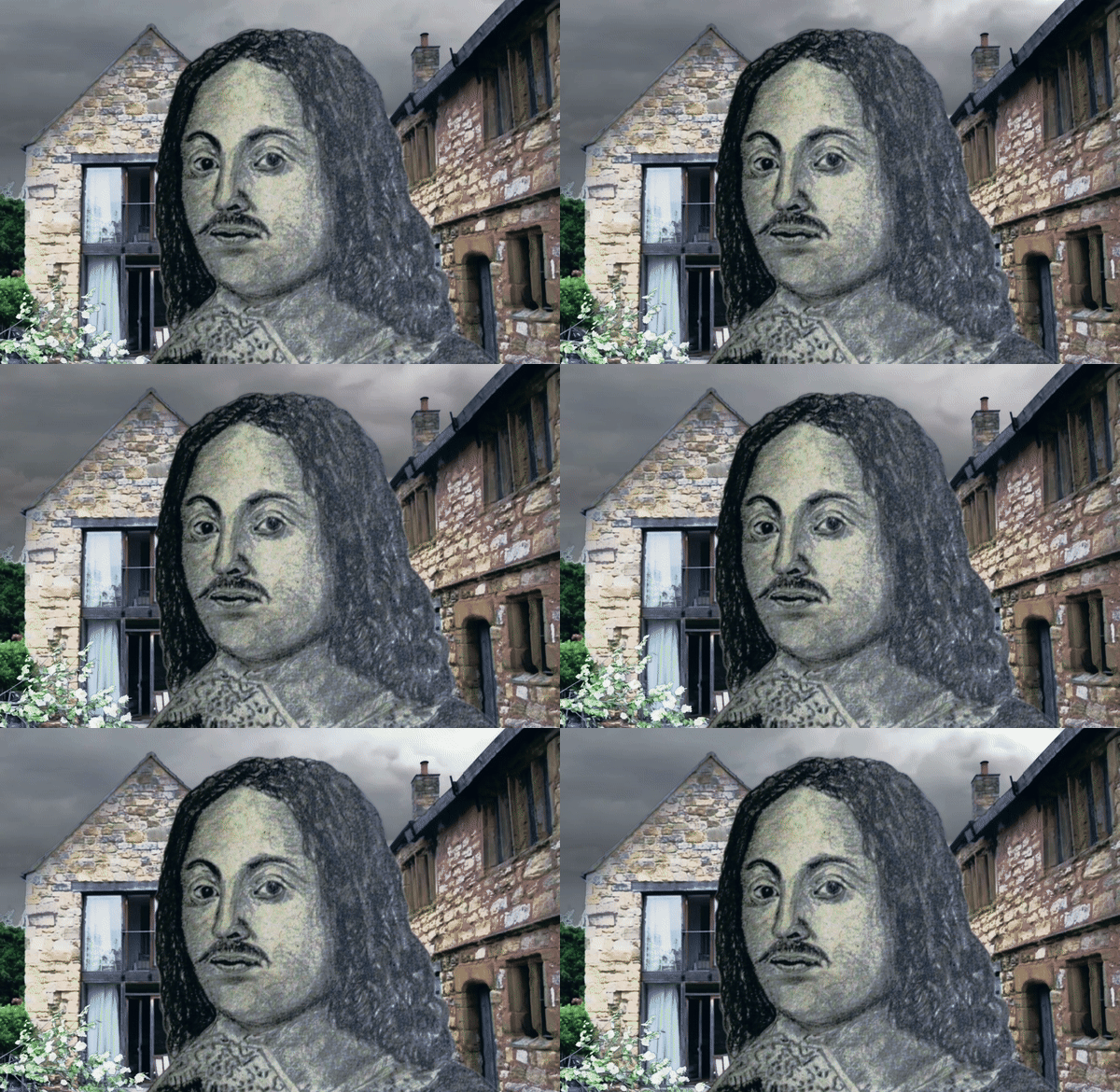
It was from this encampment inside the barn that Parliamentary forces intercepted coded royalist ciphers written by the local vicar of South Kirkby, George Beaumont, who was conspiring with the royalist captain Colonel John Morris (who then resided on the Hague Hall estate) to execute a surprise uprising and recapture Pontefract Castle.
This discovery led directly to the arrest of the vicar by the Parliamentary officer Captain Adam Baynes, culminating in Beaumont’s execution for treason. When news broke that Colonel John Morris had successfully seized Pontefract Castle for the royalists, in June 1648, the Parliamentarian soldiers stationed inside the South Kirkby tithe barn immediately marched out and plundered Morris’s personal estate, carrying off over one thousand pounds worth of livestock, agricultural goods, and bonds.
Following the Civil Wars the lordship of the manor and the principal local estates became consolidated entirely under the Allott family. The Allott family acquired the advowson and patronage of South Kirkby in 1721 through the marriage of Edward Allott to Rebecca Swallow. Their clergyman son, the Reverend Robert Allott, was presented to the living in 1728, initiating a lineage where family members served consecutively as vicars of the parish and Lords of the Manor down to 1870..
This included the Reverend John Allott, who held the manorial rights through the mid nineteenth century. The family entered possession of Hague Hall when the Reverend James Allott married the daughter of the Reverend Henry Green of Hague Hall, in the mid eighteenth century. The house subsequently underwent extensive Georgian upgrades, including the installation of modern sash windows.
Sir John Wentworth’s daughter, Catherine Wentworth, married into the Cholmley family of Howsham and upon the death of Sir Butler Cavendish Wentworth, in 1741, without direct heirs, the massive local estates and the manorship of Elmsall passed to Colonel George Cholmley. Because North and South Elmsall were historically townships situated directly within the ancient boundary of South Kirkby parish, Colonel Cholmley also exercised major economic, agricultural, and administrative influence over the wider community during the nineteenth century. He also served prominently as a senior officer in the 3rd West York Militia based in Doncaster, managing regional agricultural and milling assets alongside his primary manorial seat at Elmsall Lodge.
The agricultural architecture of this era is preserved at Stockingate Farmhouse, a Grade II listed property added to the National Heritage List for England in May 1988. Situated on Stockingate it is an early to mid eighteenth century coursed squared sandstone house featuring a symmetrical three bay front, a Tuscan doorcase with a pediment, and a classic round headed stair window. In addition East Farm located further east across the township boundary in South Elmsall, on Broad Lane, is also listed. This is a seventeenth century, three storey house with double chamfered mullioned windows. At the northern edge of the historic parish is the sandstone Kirkby Common Farmhouse on Common Road, which is also listed.
The agricultural focus of the community was anchored for centuries by a traditional corn mill which was a prominent tower windmill, used for grinding corn, situated off Stockingate. This sandstone mill operated throughout the nineteenth century and served as a focal point for the local community, eventually housing the Old Mill Wesleyan Mission, as it entered into decline, following damage to it’s sails and roof, due to severe storms.
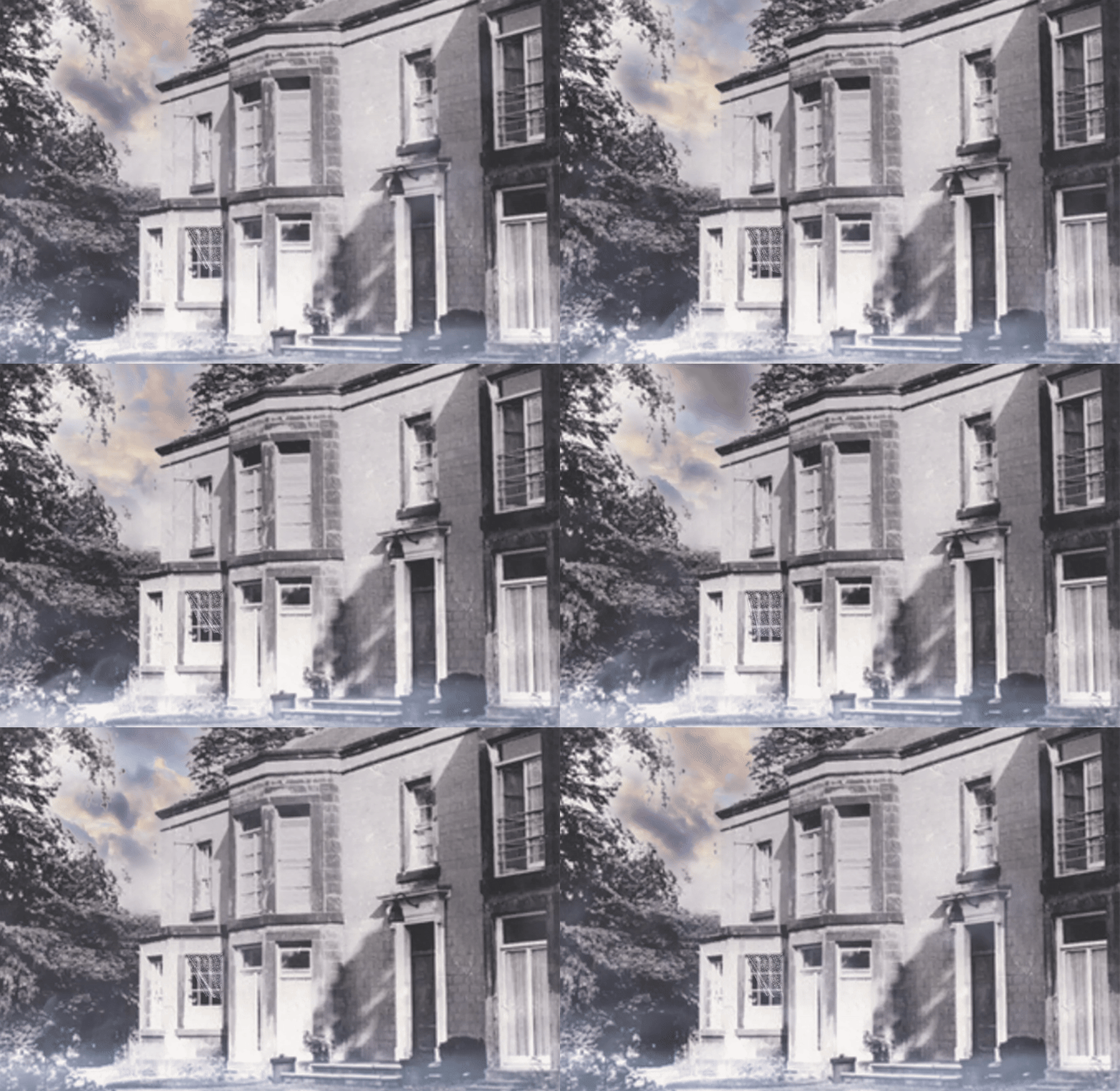
A crucial estate that significantly shaped the town’s history is The Grove, also known historically as Grove Hall, situated off Stockingate. It seems likely that the building has roots reaching significantly deeper into history than the nineteenth century. The estate was fundamentally also intertwined with the Allott family prior to its late nineteenth century ownership changes. Archival records from 1848 reveal that The Grove was the primary residence of Robert Allott, whose presence is confirmed by an 1848 property auction advertisement detailing the sale of all household furniture and farming stock at the estate following his death.
The 1871 census records that The Grove was subsequently the primary residence of Charles Booth Elmsall Wright and his wife, Edith de Cardonnel Nesfield. Charles Booth Elmsall Wright was an incredibly prominent figure in West Yorkshire, educated at Cambridge University and serving a prestigious tenure as the High Sheriff of Yorkshire between 1879 and 1880. He maintained a massive household staff at The Grove, including an army of domestic servants, grooms, and gardeners who managed the estate.
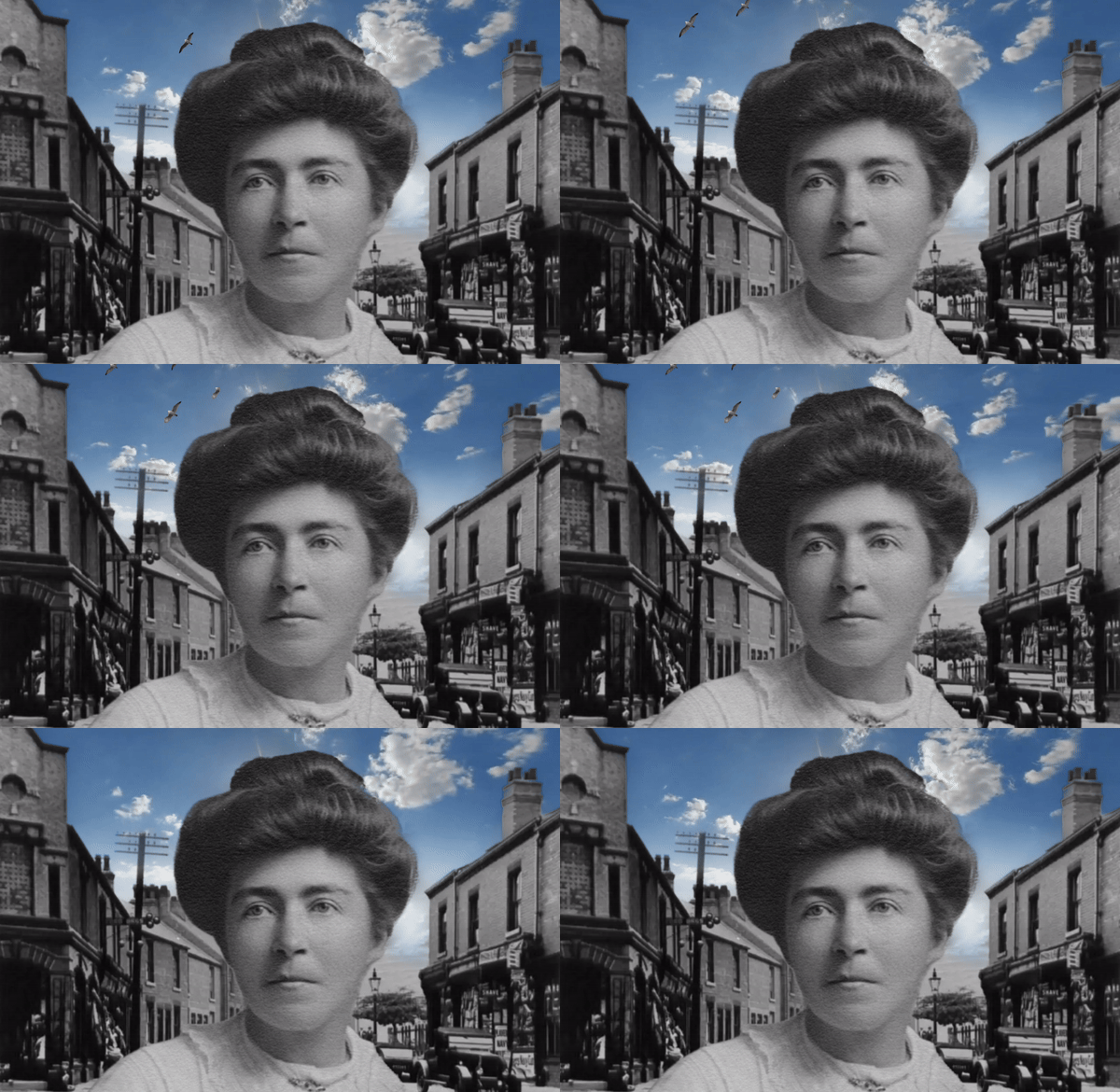
This rural, agricultural economy changed rapidly when South Kirkby Colliery was established, in 1881. Sunk to exploit deep carboniferous coal seams including the Barnsley, Meltonfield, Beamshaw, and Dunsil lines, the pit eventually operated shafts plunging down to an incredible depth of 812 yards. The colliery completely reshaped the geography of nearby Moorthorpe, forcing a massive influx of labour that swelled the workforce to nearly 3,000 miners and integrated the two independent villages into a singular township. This era of industrial growth drew notable residents, most famously Arthur Wharton, recognised as the world’s first black professional footballer, who lived at 105 Clifford Street in Moorthorpe, and worked as a miner in his later years.
Hague Hall received a comprehensive one thousand pound restoration, when purchased by Captain Pepper, in 1892. Captain Charles Pepper was a wealthy, high status regional figure and landowner who served as a Captain in the local militia and as a regional Justice of the Peace. As the primary resident of Hague Hall, his role was that of a traditional country squire, managing the agricultural estate and exercising local judicial and civic authority.
The downfall of Hague Hall was an ironic consequence of the town’s rapid industrialisation. Beginning around 1904, the subterranean coal face operations of South Kirkby Colliery directly undermined the estate’s foundations, causing severe mining subsidence. Structural stress cracks fractured the main walls, and the stone window sills snapped in half under the shifting ground pressure, forcing Captain Pepper to permanently abandon the mansion, in 1905. Following a catastrophic partial collapse of the roof and walls, structural engineering teams completely pulled down the historic hall in 1910. The singular surviving remnant of this grand estate today is the Coach House with Dovecote above Hague Hall Farm, which remains as a reminder that South Kirkby still technically has a Lord of the Manor, and it is a Grade II listed building.
Following the departure of the Wright family, The Grove also underwent a dramatic institutional transformation. In the early twentieth century the building was purchased and repurposed as a Presentation Convent, becoming a spiritual and educational sanctuary where a resident community of Catholic nuns lived and worked for decades, leaving a lasting cultural mark commemorated by the adjacent Convent Avenue. Following the departure of the convent the building was acquired by the municipal authorities and operates today as The Grove Hall, owned by South Kirkby & Moorthorpe Town Council, functioning as a prominent community civic centre, wedding venue, and public space.
The industrial life of the colliery came to a highly contested conclusion during the late twentieth century. Following the structural upheavals of the miners’ strike, the National Coal Board permanently closed South Kirkby Colliery in 1988, leaving South Kirkby and Moorthorpe with a generational decline. The heavy pithead gear and processing plants were systematically dismantled and cleared to make way for warehousing and green regeneration spaces today.

 The Story of South Kirkby